$6.1 Million an Acre: The Interconnection Becomes the Most Valuable Improvement on the Parcel
By Keith Reynolds | Publisher & Editor, ChargedUp!
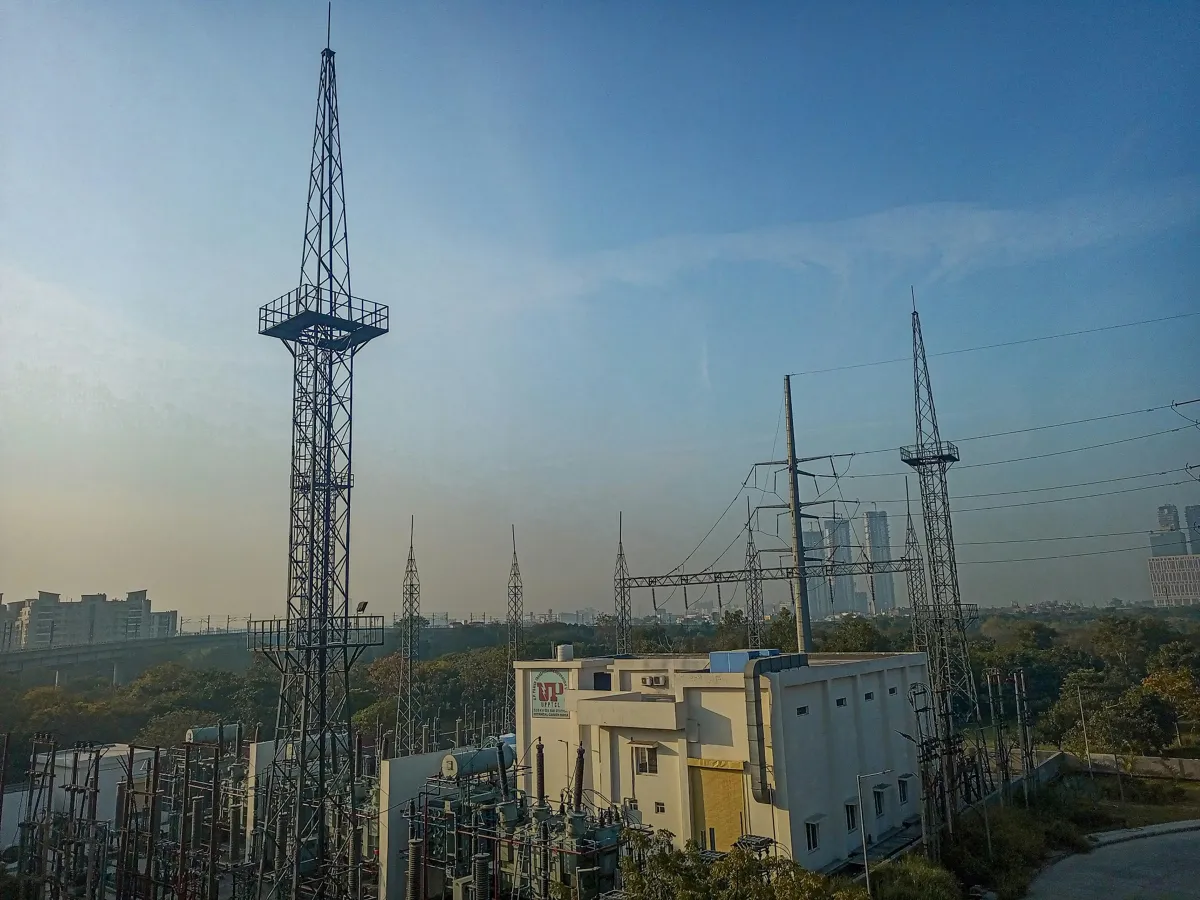
A data center site in Sterling, Virginia, traded last week at $6.1 million per acre, approaching a record set by the same seller. The dirt did not change. The grid connection under it did. Powered land in Northern Virginia now prices like urban core commercial property, and the premium attaches to a single attribute that no amount of capital can manufacture on demand: an interconnection that already works.
That transaction lands in the same week New York froze permits for hyperscale facilities above 50 megawatts, Arizona suspended data center tax breaks for three years, and Meta expanded its Louisiana campus to 5 gigawatts with total investment crossing $50 billion. Each event pushes the same direction. Access to power is contracting through policy and physics simultaneously, while demand for it compounds. The result is a repricing of American land according to what the grid will deliver, and how soon.
Time to Power Becomes the Development Constraint
Grid connection waits in the largest data center markets average at least four years, and Northern Virginia connections for loads above 50 megawatts run near seven years, according to JLL's 2026 Global Data Center Outlook. Interconnection delays of five to seven years now push project timelines out by an average of 1.5 to 2 years even after financing closes. Speed to power has displaced latency and customer proximity as the leading site selection criterion, which means a parcel with an energized connection carries an option value measured in years of avoided delay.
Construction economics amplify the effect. JLL forecasts average global data center construction costs rising 6 percent this year to $11.3 million per megawatt for shell and core, with artificial intelligence tenant fit-outs adding as much as $25 million per megawatt. Data center project spending has reached a $51 billion seasonally adjusted annual rate, per U.S. Census Bureau data, making it the largest single category of commercial building construction in the country. That capital competes for the same electricians, switchgear, and transformers every other project needs, and transformer lead times average 128 weeks with prices up more than 70 percent since 2019. A developer who must build the connection pays today's inflated prices and waits today's extended queue. A developer who buys the connection pays $6.1 million an acre and starts.
The Two-Tier Market Inside the Asset Class
Sightline Climate estimates that 30 to 50 percent of large data centers scheduled to open in 2026 will be delayed or canceled, with only 5 of 16 announced gigawatts actually under construction. That gap between announced and energized capacity is where the asset class is splitting. Stabilized, energized facilities have seen cap rates compress as scarcity bites, while speculative powered shells lacking secured power face cap rate expansion. The spread between contracted power and promised power has become the widest valuation gap in the sector.
Policy is widening that spread deliberately. New York's moratorium protects the value of every fully permitted New York facility by freezing its competition for a year. Wisconsin regulators now require some hyperscale developers to post hundreds of millions of dollars in financial security, a requirement Oracle is challenging in state court. Virginia taxes each kilowatt-hour a data center consumes. Every one of those measures raises the cost and risk of new supply, and every one of them accrues to the benefit of supply that already exists and already runs.
Meta Builds the Grid Around the Load
Meta's expansion of its Hyperion campus in Louisiana to 5 gigawatts, with investment crossing $50 billion, shows the alternative strategy available to the largest balance sheets. A single facility drawing 5 gigawatts exceeds the peak demand of most American cities. At that scale the developer stops queuing for grid capacity and starts anchoring the generation and transmission built to serve it, negotiating directly with utilities and generators as a co-investor in the system rather than a customer waiting in line.
Very few developers can do that. The strategy available to everyone else runs through the site plan. Onsite generation, battery storage, and demonstrated load flexibility shrink the request made of the grid, and a smaller request clears a shorter queue. This is the same subsidiarity logic that governs distributed power architecture: resolve the imbalance locally, and escalate only what the cell cannot absorb. Applied to development, it means the parcel that generates part of its own power competes for interconnection against a shorter list.
What This Prices Into the Portfolio
The Sterling transaction sets a marker every landowner near a substation should read. Land with electrical capacity is being underwritten as infrastructure, and the improvement that carries the value is the connection agreement, not the building. Owners of industrial parks, surface parking, and low-density commercial assets sitting behind adequate distribution capacity hold an asset the market is repricing upward without any action on their part, and they should know its worth before a broker tells them.
The corollary governs everyone else. A property whose electrical service constrains its highest and best use carries an obsolescence risk that a cosmetic renovation cannot cure. The remedy runs through the same toolkit: secure the service upgrade before the transformer queue lengthens further, or build the generation that makes the upgrade unnecessary. Every $1,000 of annual energy cost removed from the operating statement adds roughly $12,500 in asset value at an 8 percent capitalization rate, and in the markets where power is scarcest, the capacity itself has begun trading at a multiple of that.
Sources
https://datacenterfervor.substack.com/p/71326-data-center-news-blast
https://www.jll.com/en-us/insights/market-outlook/data-center-outlook
https://www.theaiconsultingnetwork.com/blog/us-data-centers-2026-half-delayed-canceled-cre-investors
https://www.powermag.com/transformers-in-2026-shortage-scramble-or-self-inflicted-crisis/
https://www.datacenterknowledge.com/data-center-construction/new-data-center-developments-july-2026
