Battery Prices Just Crashed: Why Stationary Storage is Now CRE’s Cheapest Electrification Play
With stationary battery pack prices plunging 45% to $70/kWh, commercial real estate owners have a new, affordable weapon to combat rising utility costs and manage the surging energy demands of the AI and EV era.
For decades, commercial buildings were passive consumers of the electric grid—a "monopoly-based" relationship where owners paid the bill and hoped the lights stayed on. That era is over. A new ecosystem is emerging where properties function as "edge sites," generating, storing, and managing their own power to augment an increasingly strained grid.
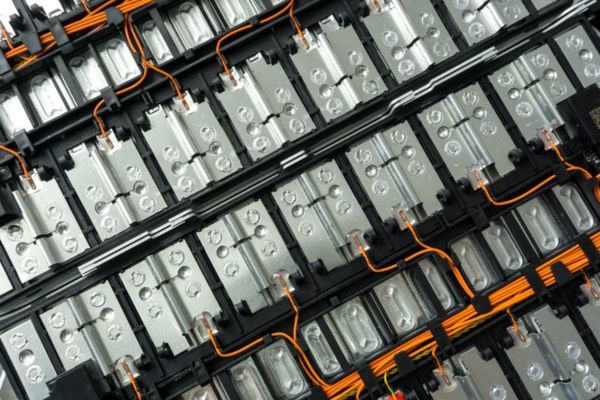
According to a new BloombergNEF report, the economic tipping point for this transition has arrived faster than anticipated. Lithium-ion battery pack prices have fallen to a record low of $108 per kilowatt-hour (kWh) in 2025. But the real game-changer for the built environment lies in stationary storage—the systems used for buildings and microgrids—which has plummeted 45% to just $70/kWh.
This massive price correction transforms battery storage from a "nice-to-have" sustainability feature into the most cost-effective tool for asset protection and net operating income (NOI) growth. For real estate investors and urban planners, the convergence of cheap storage, artificial intelligence (AI), and advanced connectivity offers a clear path to future-proof portfolios against a volatile energy market.
From Passive Ratepayer to Active Participant
The timing of this price drop is critical. While battery hardware costs are crashing, retail electricity prices are rising, driven by the need to upgrade aging infrastructure and meet the voracious energy appetite of AI data centers, electric vehicle (EV) charging hubs, and a resurgent U.S. manufacturing sector.
In this high-stakes environment, reliance on the utility monopoly is becoming a strategic risk. The alternatives are bridge power and permanent microgrid solutions that allow owners to take control. By deploying onsite battery storage, owners can shift from being price-takers to active market participants. They can "shave" expensive demand peaks, store cheap solar power for evening use, and even monetize their assets by selling stability back to the grid.
This shift mirrors the broader evolution of the grid from a centralized hierarchy to a distributed network. Just as computing moved to the "edge," power generation is moving to the property line.
The Intelligence Layer: Where AI Meets ROI
Cheap batteries are the hardware, but AI is the operating system that makes them profitable. Without intelligent control, a battery is just a bucket of potential energy. To unlock its value, buildings need an "orchestration layer" that connects disparate systems—BMS, onsite generation, and utility feeds—into a unified decision-making engine.
Justin Segal, President of Boxer Property, describes this orchestration as the missing piece in many organizations. It involves an interplay of action, data, models, and results. In the context of energy, an AI orchestration layer can predict demand spikes based on weather and occupancy, deciding in milliseconds whether to draw power from the grid, the battery, or a backup generator.
This connectivity is essential. "AI isn’t a feature you bolt on later," Segal notes. "It’s an operating layer that sits on top of your data, your networks, and your people". For energy storage, this means the difference between a static backup system and a dynamic asset that actively trades energy to maximize ROI.
Solving the "Speed-to-Energize" Crisis
The demand for power is outpacing the grid’s ability to supply it. Developers face interconnection queues that can stretch for years, threatening to kill business plans for new industrial parks or data centers.
Low-cost stationary storage provides a rapid solution. Modular bridge power systems can be deployed in months rather than years, allowing sites to energize immediately while waiting for utility upgrades. Crucially, these assets are not stranded costs; once the permanent grid connection arrives, the batteries remain to provide peak shaving, resilience, and grid services.
This "speed-to-energize" capability is vital for capitalizing on the immediate opportunities in AI and logistics. As noted in the Bridge Power thesis, this approach transforms capital equipment from a temporary expense into a long-term, re-taskable asset that preserves residual value.
The Financial Case: Demand Charges and Tax Credits
For commercial properties in markets like California, New York, or Massachusetts, demand charges—fees based on the highest 15 minutes of usage in a month—can account for 30% to 70% of the electric bill.
At $70/kWh, the math for killing these demand charges changes drastically. A well-sized battery system can now deliver a payback of three to five years purely on bill savings. When layered with the 30% Investment Tax Credit (ITC) available under the Inflation Reduction Act (IRA), the economics become undeniable.
Furthermore, as batteries shift toward Lithium Iron Phosphate (LFP) chemistry, they gain safety and longevity advantages over the nickel-based batteries used in EVs. LFP systems carry lower fire risks—critical for dense urban siting—and can withstand thousands of charge cycles, aligning perfectly with the long-hold horizons of real estate assets.
Conclusion: The New Baseline for "Class A"
We are entering a phase where energy resilience and intelligence are no longer optional. Tenants—whether they are law firms, logistics operators, or AI startups—increasingly demand "five nines" of reliability and low, predictable energy costs.
The plunge in battery prices removes the primary barrier to entry. The technology is affordable, the tax incentives are in place, and the AI tools to manage it are maturing.
For owners and investors, the playbook is clear: stop treating energy as a pass-through cost and start managing it as a core asset. Audit your portfolio for demand charge exposure, explore the new economics of stationary storage, and invest in the orchestration layer that ties it all together.
The grid of the future is being built today, one building at a time. The owners who integrate storage and intelligence now will not only weather coming volatility, but will turn their energy infrastructure into a competitive advantage.
