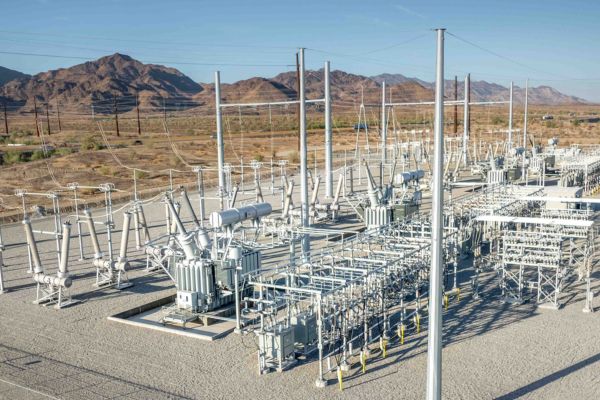
Power Is the New Land: Google’s $4.75 Billion Intersect Deal Redraws the Map for “AI-Ready” Real Estate
Alphabet’s agreement to acquire Intersect Power is not a standard clean-energy headline. It’s an infrastructure play — one that underscores how quickly electricity has become the gating factor for new development, especially anything tied to data centers, advanced manufacturing and electrified transportation.
On December 22nd, Alphabet (Google’s parent company) said it reached a definitive agreement to acquire Intersect Power for $4.75 billion in cash, plus the assumption of debt, in a deal expected to close in the first half of 2026. Alphabet said it already owned a minority stake in Intersect from a prior funding round.
For urban planners, designers, architects, investors managers, and commercial real estate developers, the “why” matters more than the price tag: The largest tenants in the market are no longer satisfied with simply contracting for renewable energy. They are increasingly trying to control the pipeline of generation, storage and power-delivery projects that determines whether a campus can be built on schedule — and operated reliably once it opens.
A one-sentence translation for non-energy readers
Google is trying to reduce the risk that a project stalls because “the power isn’t ready,” by buying a company that develops large-scale solar, storage and related infrastructure alongside data center growth. That is a major shift in how the market works — and it will ripple into where development happens, how it gets financed, and what cities and communities will demand in return.
What Google is buying — and what it isn’t
Intersect has built its brand on utility-scale solar, battery storage, and related energy systems development, increasingly framed around the needs of data center campuses.
But the most important detail is the carveout.
Reuters reported that Intersect has roughly $15 billion in assets that are operational or under construction, with projects expected to generate 10.8 gigawatts by 2028 — and that operating assets in Texas and California are excluded from the acquisition and will remain with existing investors as a separate business. Financial Times similarly reported that the deal includes Intersect’s staff and certain assets under development tied to data centers, while excluding a large set of operating and in-construction assets that remain outside the transaction.
Alphabet’s own release emphasizes the speed-and-capacity goal: bringing more data center and generation capacity online faster while accelerating U.S. energy innovation. ESG Dive reported that Intersect will remain a separate entity, with Intersect founder and CEO Sheldon Kimber continuing in his role after the deal closes, and that existing investors intend to purchase a portion of assets to operate independently.
For the real estate audience, this structure signals something precise: Google is paying for development horsepower and optionality, not just for a portfolio of power plants.
Why this matters now: the power constraint is the new permitting constraint
In many fast-growth markets, the traditional development checklist is being rewritten. Zoning, traffic, stormwater and entitlement still matter. But for large-load projects — and for any district anticipating major electrification — the critical question has become: Where does the power come from, how fast, and who pays?
The AI boom has made that question unavoidable. Associated Press framed the Intersect deal as part of Alphabet’s effort to secure vast amounts of electricity needed to power AI technology. Reuters connected it to a broader race among tech companies to invest in power infrastructure to support AI’s growing energy needs.
This is not abstract. In practical development terms, it means:
Schedules are now power-dependent. A campus can have shovel-ready land and a willing tenant and still stall on utility upgrades or interconnection studies.
The “who pays” question is political now. Communities are increasingly sensitive to whether large new loads will raise rates or trigger new generation buildouts.
The market is rewarding certainty. That certainty can come from robust utility service, but it can also come from co-located generation and storage, and from sophisticated procurement structures.
Alphabet’s move is one of the clearest signals yet that “buying renewables” is no longer enough for the biggest buyers. Controlling development pipelines is a strategic hedge.
What changes in practice: site selection gets more infrastructure-heavy
1) More vertical integration — and a new kind of competition
Alphabet is not the first company to pursue aggressive clean-energy procurement. What’s notable is the move toward owning a developer that can build and sequence projects.
Financial Times reported Alphabet’s CEO Sundar Pichai positioned the deal as improving agility in generation development and expanding data center capacity — the language of a company that sees electricity as a production input, not a commodity.
For CRE developers, this reinforces a trend: the strongest tenants increasingly behave like infrastructure planners.
2) Location logic changes: “cheap land” loses to “credible power”
The old data center pitch was: land, fiber, tax incentives, and a utility that might get you there. The new pitch is: land + power plan + deliverable timeline.
Reuters noted Intersect’s work includes some projects that co-locate data centers with clean-energy plants and that the acquisition includes energy and data center projects currently in development or under construction. That’s not a minor detail. Co-location is a way to reduce exposure to congestion, delays and volatility — and it will increasingly influence where ancillary development follows.
3) Utility negotiations become a core competency
As electricity constraints tighten, utilities and regulators will face pressure to ensure that large customers do not shift costs to ordinary ratepayers. The AP story explicitly noted community concerns about potential increases in local electricity costs as data centers expand.
If you’re a developer, the implication is immediate: power strategy will show up in public hearings, not just in engineering meetings. That can reshape public benefits expectations, mitigation packages and conditions of approval.
Why this matters for CRE, planning and design
The Intersect deal points to a future where many buildings and districts are judged not just by amenities and floor plates, but by energy performance, resilience and energy governance.
Here’s what it means in practical terms:
“AI-ready” is becoming “power-ready.” For industrial parks, master-planned communities, and mixed-use districts near large-load nodes, power availability becomes part of valuation and velocity.
Adjacent development follows capacity. Where new generation and storage can be delivered quickly, you’ll see supporting ecosystems: logistics, housing, services, and municipal infrastructure expansion.
Design teams will be asked to leave space for energy. Electrical rooms, setbacks, ventilation, redundancy pathways, and future storage footprints will matter more — not because every site installs batteries today, but because owners want the option.
This is also an emissions story — but not in a simplistic way. ESG Dive noted Alphabet’s climate goals (including 24/7 carbon-free energy by 2030) while also reporting that Alphabet’s 2025 sustainability reporting documented an increase in scope 3 emissions in 2024, reflecting the complexity of decarbonizing a fast-growing digital footprint. In other words: procurement, infrastructure and community impact are converging — and real estate is where that convergence becomes visible.
The risks: concentration, backlash and the politics of cost
Any time a handful of large players can influence the supply pipeline, scrutiny follows.
Local backlash against data centers is rising in many regions, and much of it boils down to two fears: (1) environmental and quality-of-life impacts, and (2) affordability, including whether large new loads lead to higher bills. AP noted these concerns in its coverage of the deal and the broader AI power push.
There is also concentration risk: when infrastructure is shaped by a small group of very large buyers, market pricing and access can become uneven. For planners, this raises questions about equity, resilience and who benefits from grid upgrades.
What to watch next
How Alphabet uses Intersect: Does it prioritize co-location near data centers, accelerate storage-heavy builds, or push emerging technologies? (Reuters)
How other hyperscalers respond: If “pipeline control” becomes standard, expect copycat strategies and faster competition for developable power sites. (Financial Times)
Local permitting reactions: Communities may tighten rules on large-load approvals or demand clearer cost-allocation commitments as a condition of growth. (AP News)
A CRE playbook: what to do with this information
If you’re underwriting new development or managing a portfolio in high-growth regions, take this deal as a cue to upgrade your diligence:
Add “power diligence” to site selection. Substation proximity, feeder capacity, and realistic timelines now belong alongside zoning and traffic counts.
Pre-negotiate upgrade cost allocation language in leases. Tenants with large loads will increasingly ask for clarity on who pays and what happens if timelines slip.
Treat flexibility as schedule insurance. Behind-the-meter storage, managed EV charging, and staged electrification can reduce peak exposure and buy time when the grid can’t move fast enough. (pv magazine International)
Start the power conversations early. Before you commit to a site or sign a large tenant, meet with the electric utility and potential third-party power providers to understand capacity, timelines, and options like on-site storage or contracted clean power.
The bottom line
Alphabet’s Intersect agreement is a sign of the times: electricity is no longer a background utility assumption. It is a front-end development constraint and a competitive differentiator.
For planners and the CRE industry, the message is not that every project needs to become a power plant. It’s that the market is moving toward a world where the best sites — and the best buildings — are the ones that can explain, credibly and early, how they will source power, manage peaks, and avoid shifting costs onto communities.
Google says, the acquisition augments their “ongoing commitment to partnering with utilities and energy developers across the sector to unlock abundant, reliable, affordable energy supply that enables the buildout of data center infrastructure without passing on costs to grid customers.”
In the AI era, “energy strategy” is quietly becoming part of the built environment’s operating system — and the biggest tenants are already acting accordingly.
