The Plug-In Truck With a Gas Tank: Extended-Range EVs Are Coming, and Your Parking Lot Is Part of the Plan
By Keith Reynolds | Publisher & Editor, ChargedUp!
A few years ago, the choice looked simple for commercial real estate owners budgeting for EV charging: bet on all-electric vehicles, build enough Level 2 charging for daily drivers, and maybe add a fast charger if you sat on a corridor.
Now, Detroit is introducing a new wrinkle that is easy to misunderstand and hard to ignore. Ford is rethinking the next chapter of its electric pickup strategy, and Stellantis is bringing a new kind of Ram truck to market. Their pitch will be familiar to anyone who has heard tenants complain about charging on road trips, winter range, or towing. Drivers want the quiet torque and plug-in at home economics of an EV, plus a gasoline fallback for times when the day goes sideways.
The resulting solution is a vehicle that plugs in but keeps a gas tank. Automakers call it an extended-range EV, often shortened to EREV or E-Rev. Engineers call it a series hybrid. Whichever name you prefer, it is poised to change what charging demand looks like at offices, apartments, campuses and fleet depots, not by reducing it, but by reshaping it.
How EREVs Work
An EREV is built to drive like a traditional electric vehicle. The wheels are powered by an electric motor. The battery does the heavy lifting for day-to-day driving. The gas engine is not there to help the wheels the way it does in many traditional hybrids. Instead, the engine’s primary job is to generate electricity to recharge the battery once the battery is depleted, enabling the car to cover more distance before needing to recharge. This is where the extended range feature comes into play.
EREVs are not a brand new offering. Chevrolet popularized the concept with its Volt in the early 2010s, and Argonne National Laboratory described the architecture as an extended-range electric vehicle with an onboard generator used to sustain charge. What is new is the segment and scale: the technology is extending to large SUVs and pickups, with much larger batteries than most plug-in hybrids on U.S. roads today.
From a property perspective, the key takeaway is simple. EREVs only deliver their best economics and emissions profile when drivers actually plug them in. An EREV that never charges is just a heavy gasoline vehicle carrying an expensive battery.
Why trucks and big SUVs are the first battleground
Electric pickups introduce the element of job site anxiety to traditional range anxiety. Towing, payload and cold weather cut into electric range quickly, and the charging experience for trucks can be awkward, especially when a trailer is involved. Automakers have been watching that reality collide with consumer expectations.
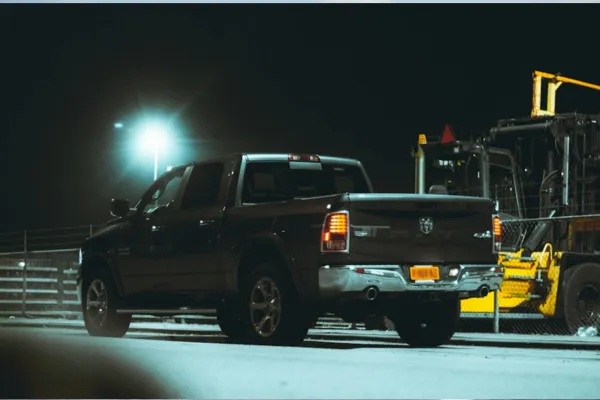
Stellantis, for example, has positioned the Ram 1500 Ramcharger as a range-extended electric pickup, built around the idea that drivers will do most local miles on electricity and still have long-trip flexibility without hunting for a fast charger that can accommodate a trailer. Scout Motors is making a similar bet with its Harvester range-extender option, offering an electric-first experience with a generator onboard for longer total range.
This positioning shift matters because it signals that EREVs are not just a niche experiment. Reporting this winter described Ford moving away from its earlier EV trajectory toward a strategy that leans more heavily into hybrids and range-extending concepts, even as it continues investing in electrified platforms.
If you own or manage buildings that serve tradespeople, contractors, municipal fleets, logistics operators or any business with a pickup-heavy workforce, this shift is the part you should care about. These are the vehicles that show up at your loading bays, your maintenance yards, your parking structures and your mixed-use garages every day.
The data point owners should keep repeating: most trips are short
The entire EREV pitch rests on a pattern that transportation data has shown for decades: most daily trips are not long. Many trips are well under 75 miles, which is why automakers believe drivers can live in electric mode most of the time if charging is convenient. This is where real estate comes in.
Highway fast charging gets the headlines, but the electric miles that make electrification stick are often created by everyday charging during long dwell times: overnight at multifamily, all day at work, or in a managed fleet depot. EREVs reinforce that dynamic. They make road trips less stressful, but increase the payoff of reliable, affordable charging where people already park.
What EREVs mean for charging demand at your properties
If you are an owner planning charging, the EREV wave changes the conversation in three practical ways.
First, Level 2 remains the workhorse, and may become more valuable, not less. An EREV with 140 to 150 miles of electric range is likely carrying a significantly larger battery than a typical plug-in hybrid. Larger batteries can soak up more kilowatt-hours when vehicles are parked for hours, which can increase demand for well-managed Level 2 charging in workplaces and apartments.
Second, the assurance of gas as a backup reduces panic-driven fast charging, but does not remove the need charging altogether. In fact, it can change the driver’s mindset from “I must find a charger now” to “I will plug in when it is easy.” That is a big advantage for commercial properties. The easier you make charging, the more electric miles your tenants and visitors will actually drive.
Third, the load-management story gets sharper. More batteries in the parking lot, even in vehicles that can fall back on gasoline, still means more electrical load when people plug in at the same time. If you have a big office complex with a morning arrival wave, or a multifamily building where charging starts at dinner, unmanaged charging can stack peaks and inflate demand charges. The economics will increasingly favor smart charging and building controls that schedule charging to fit your rate structure.
In other words, EREVs are not a setback for electrification, but rather a necessary evolution that prioritizes operational reality.
Fleet and campus owners should read this as a scheduling story
Fleets are where EREVs could spread fastest, because reliability and uptime matter more than ideology. A vehicle that can run electric locally and still complete a route if charging fails is attractive for many duty cycles.
For property owners hosting fleets, the infrastructure implications are clear: depot charging, predictable parking, and the ability to precondition vehicles and charge during off-peak windows. EREVs can take pressure off route planning, but they still reward operators who can deliver consistent charging at base.
The trap to avoid: assuming hybrid means no charging needed
Many people will refer to EREVs and hybrids interchangeably, and, in casual conversation, that shorthand will spread. The risk is that owners interpret that as permission to pause charging plans, and that is the wrong move.
EREVs are designed to be plugged in. The buildings that make charging easy will capture more of the electric part of these vehicles, which is what tenants increasingly want: lower fuel cost, quieter operation, and, for many organizations, measurable emissions reductions.
That brings the story back to the same conclusion ChargedUp! keeps landing on, even as vehicle technology evolves: Charging demand is becoming less speculative and more behavioral. Properties that make electrification frictionless will see more utilization. Properties that treat charging as a bolt-on will see more complaints, more peak-load pain, and more missed opportunity.
If EREVs become this decade's bridge vehicle, the winners will be the owners who build charging the way they build Wi-Fi: reliable, right-sized, managed, and ready to scale.
